
Last Updated: October 26, 2026
Quick Summary
Commercial painting maintenance protects your building envelope, extends surface life, and prevents costly water damage by catching paint failure early. Schedule inspections twice yearly and plan interior repainting every 3-5 years, exterior work every 5-7 years in South Florida’s UV and salt-air climate.
- Inspect your property twice yearly, before and after hurricane season, to catch UV, salt-air, wind-driven rain, and humidity wear early
- Interior spaces need repainting every 3-5 years; exterior surfaces every 5-7 years due to South Florida’s UV and salt air
- Rate inspected areas as Good, Fair, or Poor to prioritize repairs and prevent small problems from becoming expensive damage
- Schedule poor-rated areas within 6 months, fair-rated areas on a 12-month watch list, and group related work together to reduce costs
- Neglected paint allows water penetration, leading to exponentially more expensive structural and moisture damage over time
Table of Contents
- Why Commercial Painting Maintenance Matters for Property Value
- Building a Commercial Painting Inspection Checklist
- Creating Your Commercial Property Painting Schedule
- Frequently Asked Questions
Why Commercial Painting Maintenance Matters for Property Value
Commercial painting maintenance is one of the most overlooked investments a property owner can make. Paint protects your building envelope, extends the life of underlying surfaces, and signals to tenants and customers that you care about the space.
Neglected paint deteriorates faster in South Florida’s climate, where salt air, intense UV exposure, and humidity accelerate peeling, fading, and substrate damage. When paint fails, water penetrates walls, and moisture damage becomes exponentially more expensive to repair. Professional commercial painting maintenance catches problems early, preventing costly structural issues.
Consistent maintenance schedules can transform underperforming commercial buildings. Well-maintained exteriors retain property value, reduce tenant turnover, and create safer, more professional environments. The key is knowing when to inspect, what to look for, and how to prioritize work based on actual building conditions.
Building a Commercial Painting Inspection Checklist
A structured inspection checklist is your first defense against preventable paint failure. Walk your property systematically, documenting surface conditions so you can prioritize repairs and budget accurately.
Start outside. Look for peeling or flaking paint, which indicates adhesion failure or substrate movement, and chalking, a powdery residue that forms when UV degrades paint binders. Examine caulked joints around windows, doors, and trim for separation or cracking, since these gaps let water behind paint films.
Inside, inspect high-traffic areas where wear accelerates. Hallways, restrooms, and common spaces show damage faster than offices. Note any moisture stains on ceilings or walls, which signal roof leaks or HVAC condensation that must be addressed before repainting.
Document surface type: drywall, stucco, metal, or wood. Different substrates have different maintenance needs. Coastal stucco, common in South Florida properties, requires special attention to salt-air damage and hairline cracks that trap moisture.
Rate each area: Good (no action needed), Fair (monitor, plan maintenance in 12-24 months), or Poor (repair or repaint within 6 months). For insights into scheduling exterior work strategically, explore night shift commercial painting and how timing decisions affect your maintenance budget and operations. This prioritization prevents emergency repairs and spreads costs over time.
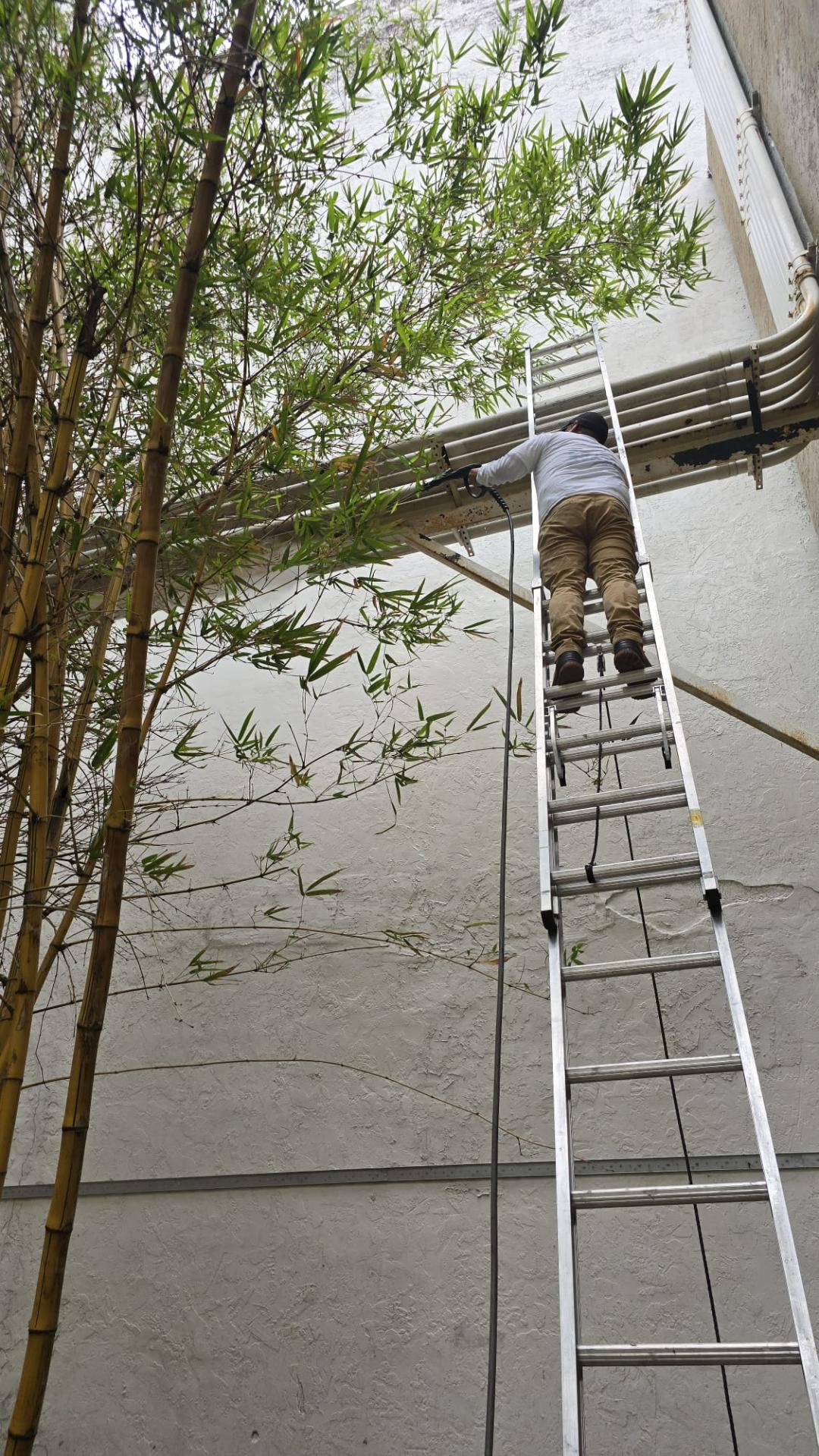
Painter on a high-reach ladder coating a two-story commercial stucco building in South Florida
Creating Your Commercial Property Painting Schedule
A maintenance calendar keeps your property protected year-round and prevents costly surprises by balancing budget constraints with building protection.
Schedule inspections twice yearly, before and after hurricane season. Pre-season inspections catch UV, salt-air, wind-driven rain, and humidity wear and plan work; post-season inspections address storm and summer wear and prepare for dry-season projects. This rhythm aligns with natural maintenance windows when weather cooperates and tenant disruption is manageable.
Interior repainting typically happens every 3-5 years depending on traffic levels and facility type. Retail spaces and offices with high foot traffic need more frequent touch-ups. Exterior repainting cycles vary by substrate and climate exposure but generally occur every 5-7 years in South Florida, where UV and salt air accelerate deterioration.
Prioritize based on inspection findings: Poor-rated areas get scheduled first, Fair-rated areas go on a 12-month watch list, and Good areas continue normal monitoring. This maximizes budget efficiency and prevents small problems from becoming expensive repairs.
Consider scheduling work during slower business periods, since many commercial tenants prefer painting during off-hours or seasonal downtime. Coordinate with professional painting services to minimize disruption to your operations.
Group related work together. If you’re repainting a hallway, refresh trim and doors at the same time. Consolidating projects reduces labor costs and scheduling complexity.
Commercial painting maintenance isn’t a luxury, it’s essential property management. Regular inspections, strategic scheduling, and professional execution protect your investment and keep your building competitive. When you’re ready to assess your property’s condition or plan a maintenance program, Details Paint Co. offers professional commercial painting services tailored to your facility’s needs. Request a free estimate to discuss your maintenance priorities and get a realistic timeline.
Follow this maintenance schedule to keep your commercial property protected and budget predictable throughout the year.
|
Area |
Inspection Frequency |
Repainting Cycle |
Notes |
|---|---|---|---|
|
Interior spaces |
Twice yearly |
Every 3-5 years |
High-traffic areas need more frequent touch-ups |
|
Exterior surfaces |
Twice yearly |
Every 5-7 years |
South Florida UV and salt air accelerate deterioration |
|
Poor-rated areas |
Pre- & post-hurricane season |
Within 6 months |
Schedule first based on inspection findings |
|
Fair-rated areas |
Pre- & post-hurricane season |
12-month watch list |
Monitor and plan maintenance accordingly |
|
Good-rated areas |
Pre- & post-hurricane season |
Continue monitoring |
No immediate action needed |
Frequently Asked Questions
How often should a commercial property be repainted?
Most commercial properties benefit from repainting every 3 to 5 years, depending on exposure, traffic, and climate. High-traffic interior areas may need refreshing every 2 to 3 years, while protected exterior surfaces might last 5 to 7 years. South Florida’s humidity and salt air can accelerate wear, so properties in coastal areas typically need more frequent maintenance. A professional inspection helps determine your specific timeline.
What should a commercial painting maintenance plan include?
A solid commercial painting maintenance plan includes regular inspections (at least twice yearly), a documented condition assessment, a prioritized repair schedule, surface cleaning protocols, and a repainting timeline. It should address high-traffic zones separately from low-wear areas, account for seasonal weather patterns, and establish clear communication with your painting contractor. This approach prevents costly emergency repairs and keeps your property looking professional.
What causes commercial paint to peel or fail?
Paint failure typically results from poor surface preparation, moisture infiltration, incompatible coating systems, or UV exposure. In commercial settings, high-traffic areas experience accelerated wear from contact and cleaning. South Florida’s humidity and salt air can cause premature peeling if the wrong coating is selected or if surfaces aren’t properly sealed. Regular maintenance and professional surface prep before repainting prevent most failure issues.