
Table of Contents
- Why Hiring Professional Painters for Occupied Homes Requires Different Planning
- How to Prepare for Interior Painting When You’re Living There
- Questions to Ask Painting Contractors Before Hiring
- How Long Does Interior Painting Take in an Occupied Home
- Vetting Checklist for Residential Painters
- Managing the Painting Project in Your Home
- Frequently Asked Questions
Last Updated: October 2, 2026
Why Hiring Professional Painters for Occupied Homes Requires Different Planning
Painting while living in your home demands a different approach than traditional renovation work. When you’re hiring painters for occupied homes, you’re managing a temporary intrusion into daily life, which means preparation, communication, and vetting become critical.
A standard painting project assumes the space is empty with full crew access and timeline flexibility. An occupied home requires contractors who understand dust containment, furniture protection, work-from-home scheduling, and liability. Details Paint Co offers residential painting services.
Success depends on contractor selection and preparation. This guide covers critical vetting questions, protection strategies, and logistics that separate professional operators from those who cut corners.
How to Prepare for Interior Painting When You’re Living There
Preparation determines whether your home becomes a construction zone or a managed workspace. When hiring painters for occupied homes, your prep work directly influences how minimally disruptive the project becomes.
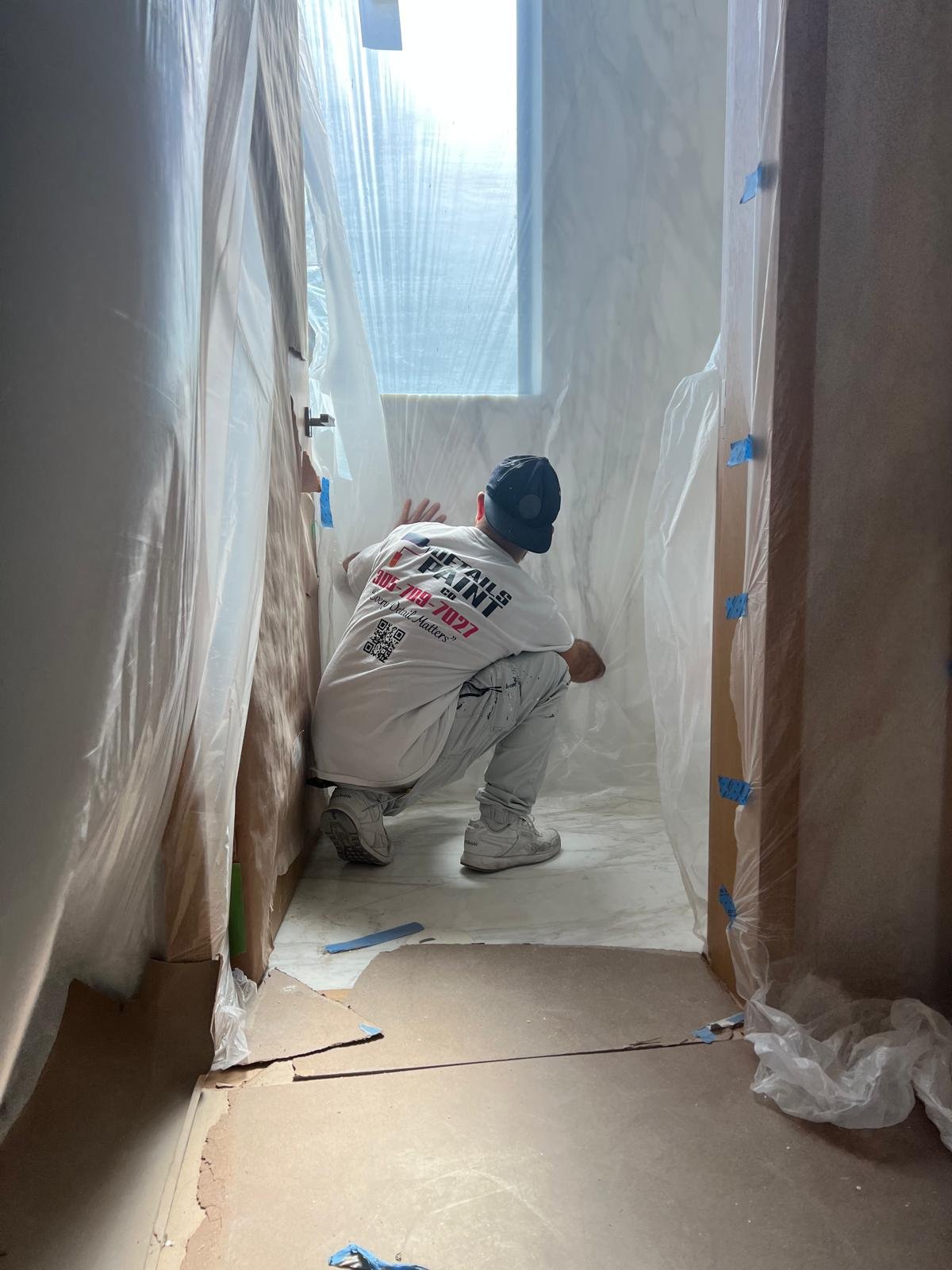
Professional painter applying tape to trim while hiring painters for occupied homes with furniture covered in plastic.
Identify which rooms will be painted and in what sequence. Prioritize rooms you use less frequently, guest bedrooms before primary bedrooms, formal dining rooms before kitchens. This staging approach maintains functional living spaces while work progresses. Experienced painters will appreciate this planning and may suggest refinements.
Clear the room of personal items, artwork, and anything irreplaceable. Move furniture to an adjacent room or center of the space and cover it completely. Paint particles travel further than expected, and cleanup becomes harder when items are partially protected.
Furniture and Fixture Protection
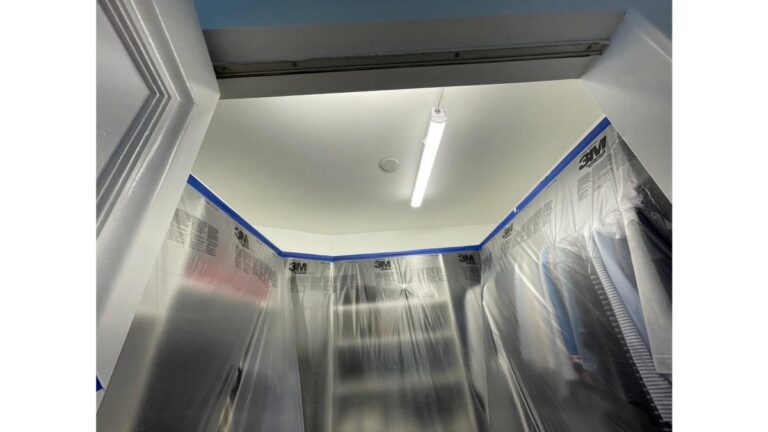
Professional painters use multiple protection layers: plastic sheeting drop cloths for moisture protection, furniture wrapped in plastic and secured with painter’s tape, and careful tape application on baseboards, trim, light fixtures, and hardware to prevent paint bleed-through.
When hiring painters for occupied homes, ask specifically how they handle fixture protection: Do they remove outlet covers and light switch plates, or tape around them? Do they seal HVAC vents? These specifics separate meticulous operators from crews cutting corners.
Interior doors should be closed and sealed with plastic sheeting to contain dust and prevent paint particles from migrating into other spaces. Ask your contractor whether they seal doors as standard practice.
Dust Containment and Air Quality
Professional painters distinguish themselves through dust containment. Standard practice involves closing doors and windows, but advanced containment uses negative air pressure systems or HEPA filtration to actively pull dust away from living areas.
Ask contractors: Do you use negative air machines or HEPA filtration equipment? These tools reduce cleanup time, protect air quality, and demonstrate understanding of occupied-home stakes.
Painting requires windows closed during application for proper curing, but opening windows becomes critical for off-gassing once paint dries. Ask your contractor about their ventilation protocol. Most interior paints require 24-48 hours of ventilation before the space is fully habitable.
Questions to Ask Painting Contractors Before Hiring
Your contractor interview determines whether you’re hiring professionals or gambling with your home.
Ask: “How long have you been painting residential interiors?” and “What percentage of your work involves occupied homes?” Contractors with significant occupied-home experience understand the nuances.
Ask: “Walk me through your process for preparing this room.” Listen for specific mentions of dust containment, furniture protection, and door sealing. Vague answers suggest insufficient planning.
Ask: “How long will this project take?” and “What happens if you run behind schedule?” If a contractor can’t give a realistic timeline or won’t commit to one, that’s a red flag.
Licensing, Insurance, and Liability
Ask directly: “Are you licensed and insured?” Request proof and verify independently with the licensing board and insurance company. Don’t accept verbal confirmation.
Why this matters: If an uninsured contractor damages your home or injures themselves on your property, you could be liable. If a contractor causes damage and then disappears, you have no recourse without insurance documentation. According to guidance on contractor liability from the National Association of Home Builders, homeowners should verify insurance before work begins.
Ask: “What does your liability insurance cover?” and “Do you carry workers’ compensation insurance?” Confirm rather than assume.
When you hire painters for occupied homes, licensing and insurance protection is a baseline requirement.
Experience with Occupied Spaces
Not all painting contractors have occupied-home experience. Ask: “How many occupied-home projects have you completed in the past year?” and “Can you describe a challenging occupied-home project and how you handled it?”
Listen for specifics about managing work-from-home situations, pets, children, and schedule adjustments. Real experience shows in concrete stories, not generic answers.
Ask: “How do you minimize noise and disruption?” and “What’s your process if something goes wrong?” These questions reveal whether they’ve thought through complications.
How Long Does Interior Painting Take in an Occupied Home
Timeline expectations differ significantly. A vacant home might be painted in 3-5 days; an occupied home typically takes 7-14 days for the same square footage.
Occupied homes require extra preparation time for furniture protection, door sealing, and dust containment. Painters work more deliberately to avoid disruption. Cleanup takes longer around your belongings. Unexpected surface prep or scheduling conflicts extend timelines further.
Ask your contractor for a detailed timeline by phase: prep, paint, drying/curing, cleanup. A realistic estimate for a 400-square-foot room: 1 day prep, 2-3 days painting, 1-2 days curing and cleanup, 5-6 days total.
Ask what happens if the timeline slips. Will they work weekends? Can they adjust their crew size? What’s their protocol if weather or unexpected surface conditions extend the project? Occupied homes require flexibility from contractors, but also clear communication about how delays are handled.
Vetting Checklist for Residential Painters
A systematic vetting process protects you from costly mistakes. Work through this checklist before signing any agreement.
Start with references. Ask for at least three recent projects, ideally within the last 12 months. Call those references and ask specific questions: “Did the crew arrive on time?” “How well did they manage dust and disruption?” “Did they stay within budget?” “Would you hire them again?” References from occupied-home projects are more valuable than references from commercial or vacant-property work.
Check online reviews across multiple platforms. Look for patterns. One negative review might be an outlier; multiple complaints about the same issue suggest a real problem. Pay particular attention to reviews mentioning occupied homes, dust management, or professionalism.
Verify Credentials and References
Request proof of licensing and insurance before the interview ends. Don’t accept verbal confirmation, ask for documentation you can verify independently. Call your state licensing board and the insurance company to confirm everything is current.
Ask for a portfolio of recent work. Photos should show finished results, but also ask about the projects themselves: square footage, complexity, timeline, any complications. A contractor confident in their work will have documentation.
Request at least three references from occupied-home projects specifically. When you call, ask whether the contractor showed up on time, whether the crew was professional, whether they managed disruption well, and whether the final result met expectations. Ask if they’d hire the same contractor again, that’s the most telling question.
Evaluate Quality Control and Workmanship Standards
Quality separates professional painters from crews just trying to finish fast. Ask: “What’s your quality control process?” and “What happens if you make a mistake?”
Professional painters inspect their work before leaving. They check for drips, uneven coverage, and paint bleed under tape. They sand between coats. They use proper techniques for edge cutting and trim work. They understand that quality isn’t about rushing through the job, it’s about deliberate execution.
Ask about their warranty or guarantee. What if you notice a problem after they leave? Do they come back to fix it? For how long? A contractor standing behind their work will offer a clear guarantee.
Managing the Painting Project in Your Home
Once work begins, clear communication prevents misunderstandings. Establish expectations on the first day, before any paint is opened.
Setting Expectations for Daily Operations
Noise levels and timing matter. If you work from home or have young children, discuss when the crew should avoid loud activities like sanding. Most painters can schedule louder work during mid-morning or early afternoon.
Site Cleanup and Final Walkthrough
Professional painters clean as they go, but final cleanup is critical. Ask your contractor: “What does your final cleanup include?” and “When do you consider the project complete?”
Frequently Asked Questions
How do I know if a residential painter is actually licensed and insured?
Ask for proof of current licensing and insurance certificates before work begins. A fully licensed and insured contractor should provide these documents without hesitation. Verify the license number with your state’s licensing board and confirm the insurance policy is active and covers liability for occupied homes. This protects you if damage occurs or someone is injured during the project. Reputable residential painters keep this documentation readily available as proof of professional standing.
How should I prepare my house for painters while living in it?
Start by removing or covering furniture, moving items away from walls, and protecting floors with drop cloths. Close off rooms you’re not using if possible to contain dust. Communicate with painters about your daily schedule so they can work around your presence. Ensure adequate ventilation by opening windows and doors during and after paint application. Remove light fixtures, outlet covers, and switch plates if the painter requests it. Discuss dust containment measures upfront—professional painters should use plastic sheeting and seal doorways to minimize impact on occupied spaces.
What questions should I ask a painting contractor before hiring them for my home?
Ask about their experience with occupied homes, how they handle dust containment, and their project timeline. Request references from recent residential projects and verify licensing and insurance. Discuss color consultation services and whether they provide a detailed service agreement outlining scope, timeline, and cleanup responsibilities. Ask about their surface preparation process and how they ensure quality control. Clarify how they’ll protect your property and what happens if the project runs behind schedule. Understanding their approach to customer satisfaction and communication is essential for a smooth experience.
How long does interior painting typically take in an occupied home?
A typical room takes 2-4 days depending on size, condition, and the number of coats needed. Full interior painting of a 2,000 square foot home usually requires 5-10 working days. Timelines extend in occupied homes because painters must work around your schedule, set up dust containment, and allow extra time for careful furniture protection. Surface preparation—cleaning, patching, and priming—often takes longer than actual paint application. The contractor should provide a detailed project timeline during the estimation phase so you know exactly when work will occur and when your space will be fully accessible again.