
Last Updated: October 23, 2026
Quick Summary
Painting occupied homes requires strategic containment, room-by-room protection, and deliberate application techniques to prevent mess. Use plastic sheeting and drop cloths to protect furniture and floors, maintain clear pathways for occupants, and apply paint with proper technique to minimize splatters and spills.
- Cover furniture completely with plastic sheeting secured by painter’s tape, tucking edges underneath to catch splatters from all angles.
- Lay canvas drop cloths on floors with overlaps of at least 6 inches, taped at edges to baseboards to prevent paint seeping underneath.
- Paint one room at a time starting farthest from main living areas, using plastic sheeting barriers at doorways to contain odor and dust.
- Use low-VOC paint which dries in 1-2 hours instead of 2-4 hours, reducing odor exposure and project duration in occupied spaces.
- Blot paint spills immediately with clean rags rather than wiping, and keep cleanup supplies within arm’s reach during painting.
Table of Contents
- Why Painting Occupied Homes Requires Different Preparation
- How to Protect Furniture When Painting
- How to Protect Floors When Painting
- Painting a Room While Living in the House: A Staged Approach
- Essential Paint Application Techniques for Mess Prevention
- How to Clean Up Paint Spills Effectively
- Protecting Delicate Surfaces and Electronics
- Conclusion
- Frequently Asked Questions
Why Painting Occupied Homes Requires Different Preparation
Painting occupied homes demands a different approach than working in an empty space, your daily routine continues and the work environment stays active.
Most DIY painters and even some contractors stumble here, leaving splatters, odor, and dust on surfaces the homeowner never expected to protect. Painting occupied homes requires strategic planning, room-by-room containment, and deliberate application that prevents mess before it starts.
The key difference is containment: managing dust, controlling odor, minimizing disruption, and ensuring fast cleanup. A staged approach transforms what could be chaotic into something manageable.
How to Protect Furniture When Painting
Furniture is the biggest target for paint damage, and in an occupied home you usually can’t empty the room. A single splatter can ruin an upholstered chair or a table finish.
Start by pushing furniture toward the center of the room to create a clear perimeter around the edges. For items you can’t move, cover them completely.
Use plastic sheeting or heavy-duty drop cloths, plastic works better for furniture because it’s waterproof.
For delicate upholstered pieces, moving them to another room is safest.
Protecting Belongings, Electronics, and Fragile Items
In an occupied home, the harder problem is everything else people leave in the room: artwork, electronics, lamps, and the small objects on shelves.
- Electronics. Cover televisions, monitors, and computers with plastic sheeting and tape it securely. Paint overspray can coat screens and work into vents and ports. Unplug and move smaller devices out of the room entirely.
- Artwork and framed pieces. Remove them from the walls before you start, even if you’re only painting adjacent walls. If a piece can’t come down, wrap it in plastic and tape the edges. Gilt frames and antique surfaces are especially unforgiving of splatter.
- Bookshelves and display shelves. Don’t try to cover around the objects. Empty the shelves into boxes, move the boxes to a closed room, and cover the empty unit. This is faster than wrapping dozens of small items and far safer for them.
- Light fixtures and ceiling fans. Turn them off and cover them. Paint overspray coats bulbs and reduces light output; for ceiling fans, cover the blades and motor housing with plastic bags secured with tape.
- Door handles and light switches. Cover these with plastic bags secured with painter’s tape so paint doesn’t transfer to hands and then to other surfaces.
A Room-Use Plan for Occupied Homes
Protection only works if the room stays usable. Before you cover anything, keep a clear walking path from the door to whatever occupants still need to reach, protect it with a runner or taped drop cloth, and work in zones rather than covering the entire room at once.

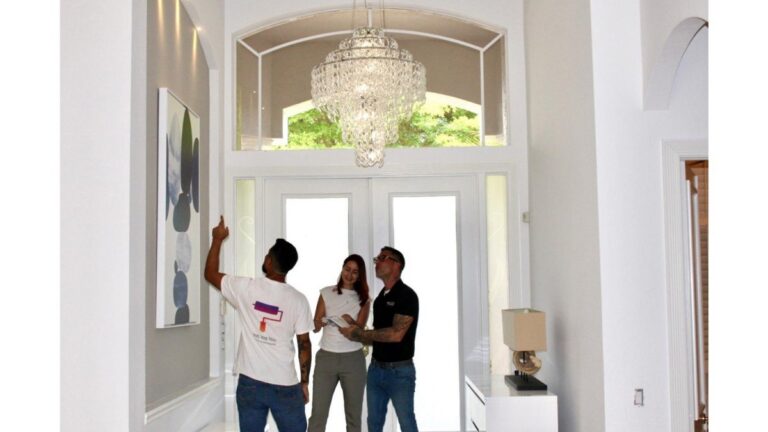
Professional painter covering furniture with plastic sheeting while painting occupied homes in a living room.
How to Protect Floors When Painting
Floors take the most punishment during interior painting. Drips, roller spray, and foot traffic spread spills, so protecting floors properly is non-negotiable when people are living in the home.
Start with canvas drop cloths, which are better than plastic for floors because they’re slip-resistant and durable.
In high-traffic areas, add a second layer: plastic sheeting over the canvas in the main work zone keeps spills and splatters contained.
Tape the edges of all coverings to the baseboards with painter’s tape to prevent paint from seeping underneath when you’re cutting in.
Painting a Room While Living in the House: A Staged Approach
The biggest challenge with painting occupied homes is that life doesn’t stop, people need bathrooms, bedrooms, and passage through the space.
Room-by-Room Containment Strategy
Divide the project into phases. Paint one room at a time, starting farthest from main living areas, to minimize disruption and keep odor and dust from spreading.
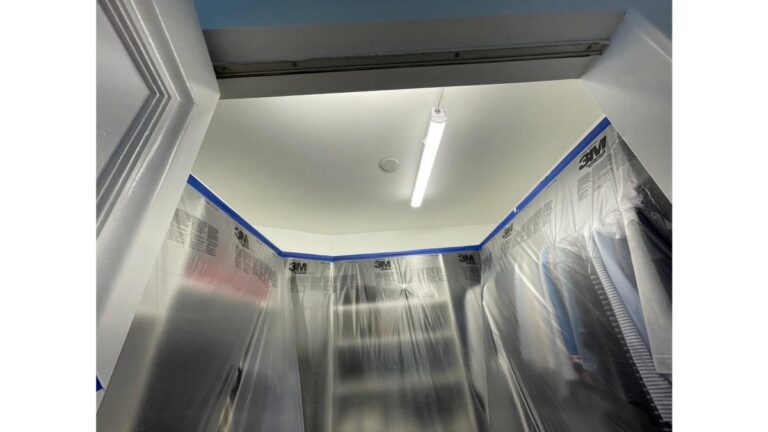
For each room, create a containment barrier: hang plastic sheeting from the top of the door frame, tape it to the walls on both sides, and leave only a small gap at the bottom for movement.
Set up a dedicated cleanup area in one corner with trays, brushes, rollers, rags, and water buckets.
Minimizing Odor and Fumes
Paint odor is one of the biggest complaints when painting occupied homes.
Even with low-odor paint, ventilation is critical. Open windows in the room being painted and use fans to direct air flow outward, not into the rest of the house.
Keep doors to occupied spaces closed. Seal gaps around door frames with plastic sheeting so odor can’t drift into bedrooms or living areas.
Drying time affects odor persistence.
After painting, leave windows open for at least 24 hours so residual odor can escape, air circulation is your best tool for odor management.
Essential Paint Application Techniques for Mess Prevention
How you apply paint matters as much as what you cover. Proper technique reduces splatters, drips, and spills dramatically.
Start with a paint tray liner.
Load your brush and roller correctly.
Use a wet edge technique: apply paint in overlapping sections while the previous section is still wet.
When cutting in at edges and corners, use a smaller brush and move slowly, fast strokes cause splatters.
For roller application, use smooth, even strokes and light, consistent pressure. Pressing hard squeezes paint out and splatters.
How to Clean Up Paint Spills Effectively
Spills happen. Fast cleanup prevents a spill from spreading into a permanent stain, and in an occupied home, from being tracked through the rest of the house.
First, Identify the Paint Type
Before you touch a spill, know what you’re cleaning. Latex and other water-based paints clean up with water while wet; oil-based paints, alkyds, and most stains and varnishes require mineral spirits or paint thinner. The wrong solvent won’t remove the paint and can damage the surface underneath, so check the can label.
Water-Based Paint Spills
For wet latex spills on hard floors, blot immediately with a clean rag. Don’t wipe in circles; blot straight down to absorb paint without spreading it, then rinse and blot again until no color transfers.
Once latex paint dries, water alone won’t lift it. On hard surfaces, dampen the area with warm water and let it sit for a few minutes to soften the film, then scrape gently with a plastic putty knife.
Oil-Based Paint Spills
Oil-based spills need solvent from the start. Blot up as much wet paint as you can with rags you’re willing to discard, then apply mineral spirits to a clean rag and work from the outside inward so you don’t spread the stain. Ventilate the room, keep solvent-soaked rags out of closed bins, and clean paint on skin with soap and water or a commercial hand cleaner rather than harsh solvents.
Spill Response by Surface
- Hard floors (tile, vinyl, sealed wood). Blot wet paint, then use a plastic putty knife to lift dried film. Avoid metal scrapers on finished wood.
- Carpet and rugs. Blot, don’t rub. Work from the edges inward and rinse between passes. Test any cleaner in an inconspicuous spot first.
- Upholstery. Blot immediately and keep the area damp rather than soaking it. If the paint has started to set, consult a professional upholstery cleaner before trying solvent.
- Furniture and trim. Match the solvent to the paint type, and test on the underside or back before treating a visible surface.
Set Up a Spill Station Before You Start
Keep cleanup supplies within arm’s reach during painting: paper towels, rags, a bucket of clean water, the correct solvent, and a sealable bag for used rags. A dedicated spill station inside the work area means you can respond in seconds instead of hunting through the house, the difference between a spot you blot up and a stain you live with.
Protecting Delicate Surfaces and Electronics
Electronics and delicate finishes need extra attention during painting occupied homes, they’re expensive and often difficult to replace. Cover televisions, monitors, and electronics with plastic sheeting taped securely so it won’t shift; overspray can damage screens and internal components. For delicate wood finishes, gilt frames, or antiques, move them to another room if possible, if they must stay, wrap them completely in plastic and secure with tape rather than relying on drop cloths alone.
Conclusion
Painting occupied homes without making mess is entirely manageable when you plan systematically: contain the work area, protect surfaces strategically, use proper application techniques, and respond quickly to spills. We’ve refined this approach through many projects in occupied homes, handling the preparation, containment, and cleanup so your daily routine continues uninterrupted.
When you’re ready to transform your space without the disruption, we’re here to help. Get a free consultation with professional painting services today. We’ll assess your project, discuss your timeline, and show you exactly how we minimize mess while delivering the high-quality finish you expect.
Frequently Asked Questions
Can I paint my house while still living in it?
Yes, you can paint an occupied home with proper planning. The key is room-by-room containment, using low-odor paint, ensuring good ventilation, and protecting furniture and floors thoroughly. Schedule painting during hours when occupants can leave or stay in unaffected rooms. Professional painters experienced in occupied homes use dust barriers, seal doorways, and work systematically to minimize disruption and mess.
What’s the best way to protect furniture when painting a room?
Move furniture to the center of the room and cover it completely with plastic sheeting or drop cloths secured with painter’s tape. For items you cannot move, cover them with plastic bags or cling film. Use painter’s tape around the base of furniture to create a seal. This prevents paint splatters and dust from settling on surfaces, and makes cleanup faster.
How do I clean up paint spills quickly without damaging the floor?
Act immediately: blot wet paint with a cloth or paper towels rather than wiping. For latex paint, use warm water and mild soap. For oil-based paint, use mineral spirits or paint thinner. Test any cleaner on a hidden area first. Prevent spills by using tray liners, securing tape around tray edges, and keeping brushes and rollers over the tray. A well-prepared floor with drop cloths and plastic sheeting stops most spills before they become a problem.
What paint type is best for painting occupied homes?
Low-VOC (volatile organic compound) and low-odor latex paints are ideal for occupied homes because they release fewer fumes and dry faster than traditional oil-based paints. These paints are easier to clean up with water, reduce health concerns for occupants, and still deliver professional, durable finishes. Always ensure adequate ventilation even with low-odor options, and choose quality paint that covers well in fewer coats to speed up the project.