
Last Updated: October 28, 2026
Quick Summary
Yes, hiring a professional painter for faux finishes is usually worth it, because the effect depends on layering glaze, controlling how it drags and blends, and timing each step before it sets. Humidity in South Florida adds further difficulty, since it changes how glazes flow and dry. Ask to see completed finishes or sample boards before booking.
- Faux finishes depend on layering glaze and controlling how it drags and blends.
- South Florida humidity slows drying and shifts glaze flow, changing results day to day.
- Any flaw in the substrate shows through translucent glaze, so smooth priming comes first.
- Ask the painter to show completed finishes or sample boards before you book.
- Confirm the painter has done your specific faux finish technique before.
Table of Contents
- What Makes Faux Finishes Hard to Get Right
- Faux Finish Painting Examples and Process
- Types of Faux Finishes for South Florida Homes
- What Hiring a Pro Costs vs. DIY
- Prep and Substrate: Drywall, Stucco, and Masonry
- Durability in Salt Air and Humidity
- How to Pick a Finish for Miami Beach Coastal Modern and Mediterranean Homes
- What to Ask a Faux Finish Painter Before You Book
- Frequently Asked Questions
What Makes Faux Finishes Hard to Get Right
Faux finishes look simple in a showroom sample, but they demand far more skill than a standard wall coat. The effect depends on layering glaze, controlling how it drags and blends, and timing each step before the material sets.
South Florida humidity makes this harder. Warm, moist air slows drying and shifts how glazes flow, so the same technique can produce different results on a Tuesday than on a Friday.
Faux Finish Painting Examples and Process
A typical project starts with a smooth, properly primed substrate, because any flaw telegraphs through translucent glaze.
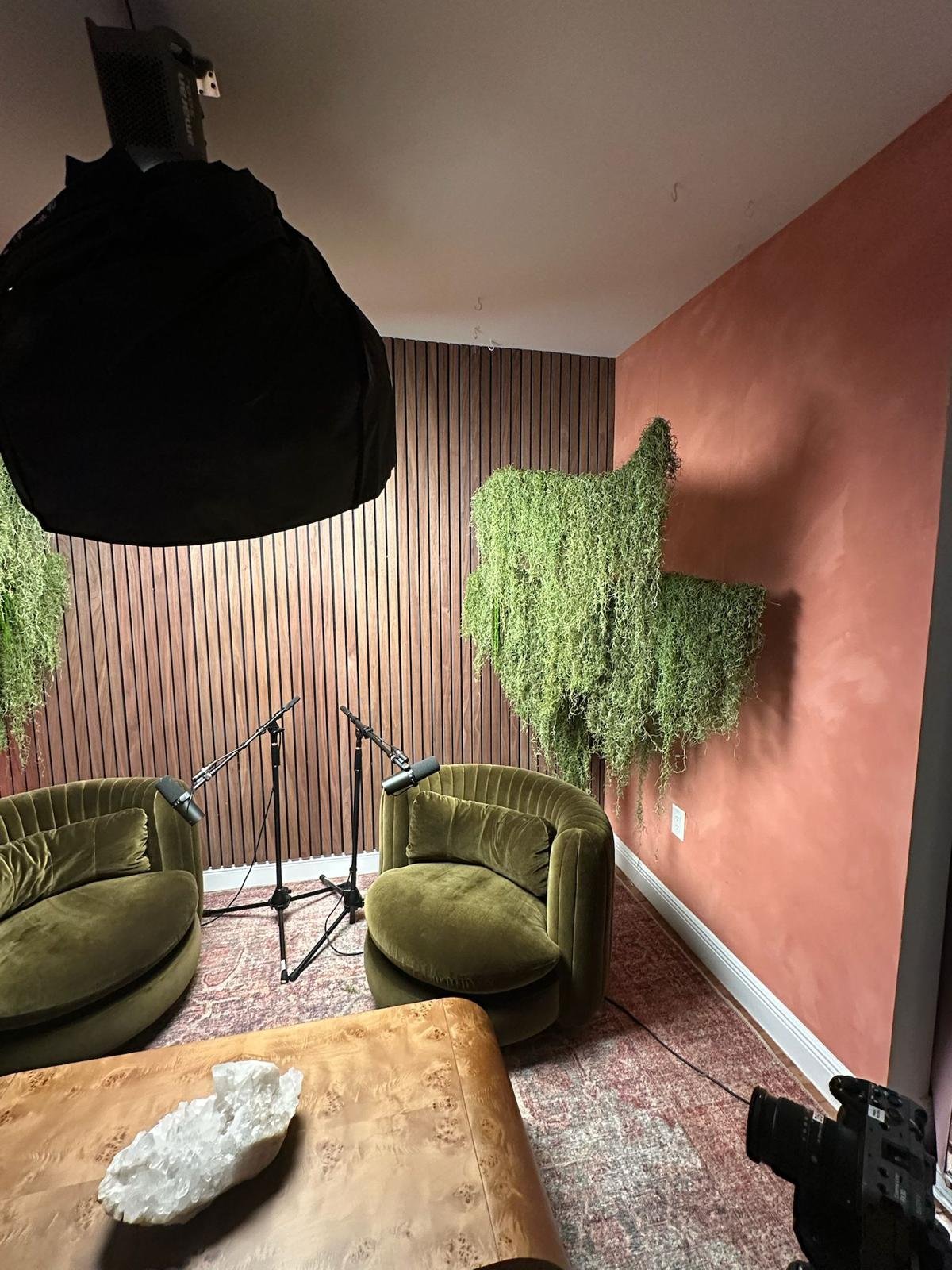
A textured terracotta Venetian plaster accent wall with vertical wood-slat panels in a South Florida lounge, a Details Paint Co. project.
Types of Faux Finishes for South Florida Homes
Faux finishes imitate materials such as stone, aged plaster, or wood using layers of paint, glaze, and plaster. Each one behaves differently on the wall, which is why the technique matters as much as the color.
Venetian Plaster
Venetian plaster is built from thin, troweled layers that are burnished to a smooth, polished surface with depth and subtle movement. It needs a flat, sound substrate and steady troweling, because every ridge and edge shows once the final coat is burnished.
Limewash
Limewash is a mineral-based wash that gives walls a soft, cloudy, matte look. It is applied in thin, brushed coats, and the final appearance depends on how the brush strokes overlap. It suits interior feature walls and some masonry, but it should be matched to the surface and tested first.
Marbling
Marbling uses glazes and fine veining tools to imitate natural stone. Convincing veining takes a practiced hand and a sense of how real marble flows, so it is usually a job for a painter with relevant experience.
Wood Graining
Wood graining recreates the look of natural timber on doors, trim, panels, or ceilings by dragging glaze over a base coat. The base color and glaze tone have to work together, and the grain direction needs to look believable.
Metallic Glazes
Metallic glazes add a soft shimmer that shifts with the light. Because the effect depends on light reflection, an uneven substrate or inconsistent application shows more than it would with flat paint.
Color Washing
Color washing layers translucent tones over a base coat to create a gently mottled, aged look. It is one of the more forgiving styles, but it still relies on controlled, even layering to avoid obvious patches.
What Hiring a Pro Costs vs. DIY
We do not quote prices in a general article, because faux finish pricing depends on the project. Cost is driven by the technique, the wall area, ceiling height, the condition of the surface, the number of coats and layers, and how much prep work is needed. Written estimates from licensed contractors are the only reliable way to compare costs for your home.
A DIY approach can look cheaper at first, since materials such as plaster, glaze, and tools are sold to homeowners. The hidden costs are time, practice, and the risk of mistakes. Layered finishes are hard to fix once they set. A flawed Venetian plaster or glaze wall usually has to be sanded back or skimmed and started again, which can cost more than hiring a professional the first time. Practice boards help, but they do not fully replace experience with how a material behaves on a real wall in a humid climate.
A professional also brings consistency across a whole room, since the finish must look the same from one corner to the next. A mismatch between sections is one of the most common problems with amateur faux work.
Prep and Substrate: Drywall, Stucco, and Masonry
The surface under a faux finish determines how good the finish looks and how long it lasts. Translucent glazes and thin plaster layers reveal every flaw underneath, so prep is not optional.
- Drywall: Seams, screw heads, and patches should be taped, filled, sanded smooth, and primed. Unprimed or unevenly sealed drywall can absorb glaze unevenly and leave visible flashing.
- Stucco: Stucco is textured and porous. For an exterior finish, cracks should be repaired and the surface checked for moisture and previous coatings. For a smoother interior look, the texture may need to be skim-coated.
- Masonry: Block and concrete are alkaline and can hold moisture. They need to be clean, dry, and sound, with any efflorescence or loose material addressed, before a primer or finish is applied.
In humid South Florida homes, moisture is the main prep concern. A professional should check for damp walls, past leaks, and mildew, and fix the cause before any finish goes on. Coating over a moisture problem can lead to bubbling, staining, or peeling later.
Durability in Salt Air and Humidity
Homes in Miami-Dade and Broward County deal with warm, damp air, and properties near the water also deal with salt in the air. These conditions affect how faux finishes age.
Interior finishes in air-conditioned rooms generally face the least stress, but bathrooms, laundry rooms, and covered patios see more humidity. Exterior and open-air finishes face sun, rain, and salt. Choose products rated for the location, and ask the contractor which topcoat or sealer they recommend for each room. Some finishes may need periodic cleaning, touch-ups, or resealing, so ask what maintenance to expect.
How to Pick a Finish for Miami Beach Coastal Modern and Mediterranean Homes
The architecture of the home is a good starting point for choosing a finish.
- Coastal modern: Clean lines, large windows, and bright light suit subtle finishes such as soft limewash, fine color washing, or a smooth Venetian plaster in a calm neutral. These add texture without competing with the view.
- Mediterranean: Arched openings, tile roofs, and warm tones suit richer, more textured finishes such as aged-look plaster, warm color washing, or wood graining on doors and beams.
Look at the finish in your own light. Ask for a sample board and view it in the morning, at midday, and in the evening, because South Florida sunlight changes how glaze, metallic, and plaster finishes read.
What to Ask a Faux Finish Painter Before You Book
Ask to see completed finishes or sample boards, and confirm the painter has done your specific technique before.
Before you sign an estimate, a short list of questions can tell you a lot about a contractor.
- Are you licensed and insured? Ask for proof of both, and verify the license with the state before work begins. A contractor who works in your home should carry insurance that protects you if something goes wrong.
- Can you show me samples? Ask for sample boards of the specific finish you want, applied on a similar surface, and view them in the room where the finish will go.
- Can I see your portfolio? Look for completed faux finish projects similar to yours, and check for consistency across several of them rather than one standout photo.
- How will you prep my walls? The answer should cover repairs, priming, and how moisture is handled in a humid climate.
- Who will do the work? Confirm who will be on site and whether any part of the job is subcontracted.
- What does the written estimate include? It should name the finish, the products, the number of coats or layers, the schedule, and what is not included.
- How will you protect my home? Ask about masking, floor and furniture protection, and cleanup at the end of each day.
- What maintenance should I expect? Ask how to clean the finish and whether it will need resealing or touch-ups over time.
A good contractor will answer these clearly and without pressure. If answers are vague, or samples and references are not available, keep looking. Details Paint Co. serves homeowners across Miami-Dade and Broward County, and you are welcome to ask us all of these questions.
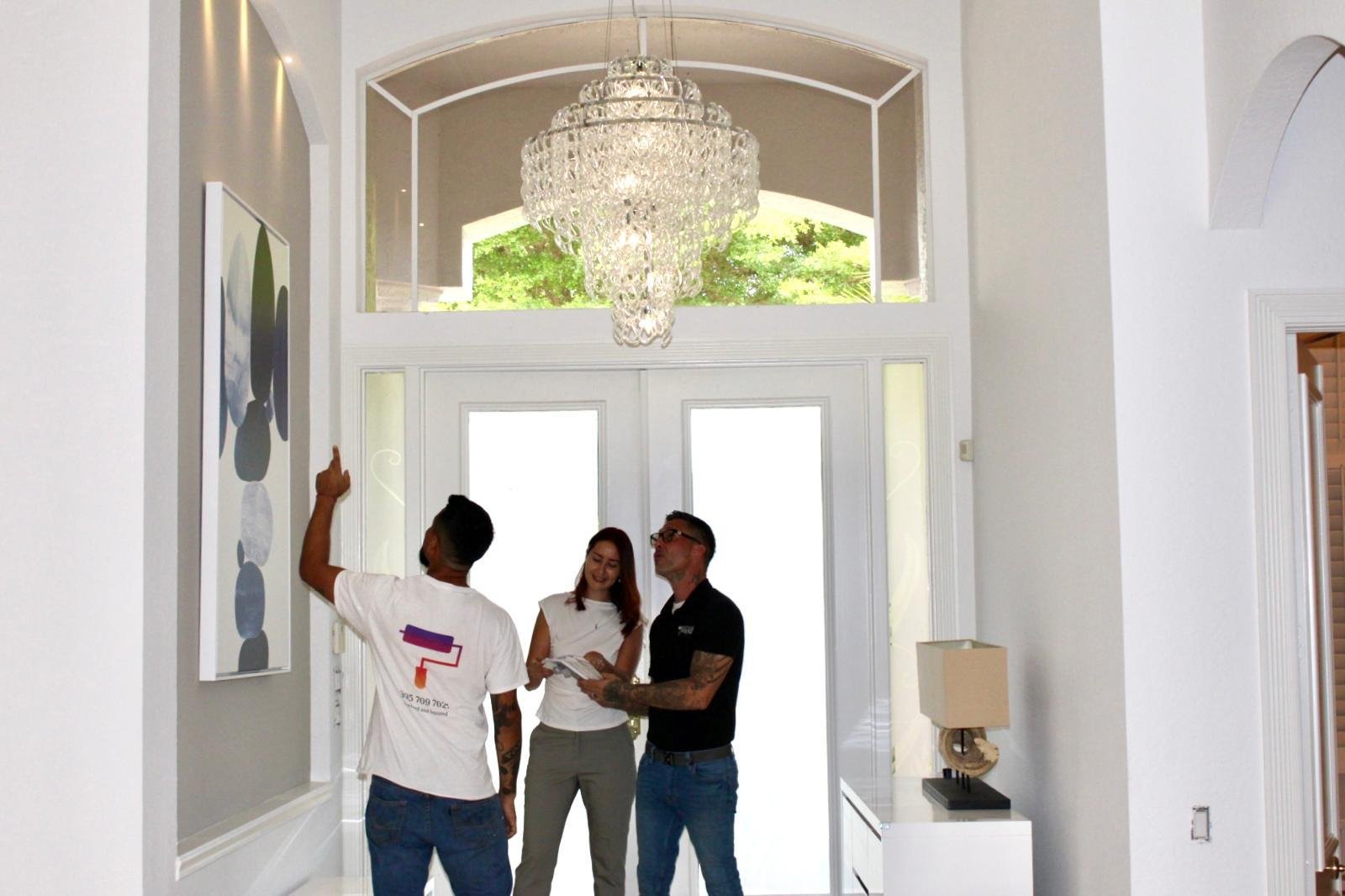
You can also review our wallpaper and faux finish services to see what this work involves, or request a residential painting consultation to discuss your room. For questions about your project, contact Details Paint Co. at (754) 287-6408.
Frequently Asked Questions
What should I ask before hiring a faux finish painter?
Ask to see completed faux finish work in person or through photos of similar projects, not just a general portfolio. Ask who will do the work, whether they are licensed and insured, and how they prepare surfaces. A clear, specific answer to each question is a good sign of a careful contractor.
How long does a faux finish painting project take?
Timing depends on wall size, the complexity of the technique, and how much prep is needed. Ask the painter for a written timeline and confirm how they will handle delays.
How do I evaluate a faux finish painter’s portfolio?
Look for consistency across several projects rather than one standout photo. Check whether edges, corners, and transitions are clean, and whether the finish looks similar in different lighting. A strong portfolio shows the painter has handled a range of techniques and surfaces, not only one style.
Which faux finishes work best in humid South Florida homes?
Venetian plaster, limewash, and color washing are all used in South Florida, but the right choice depends on the room and the surface. Bathrooms, laundry rooms, and covered patios see more humidity than air-conditioned living spaces, so ask the contractor which products and sealers they recommend for each location and how the finish should be maintained.
Can faux finishes be applied over stucco or masonry?
Often yes, but the surface must be sound, clean, dry, and properly primed. Stucco and block can hold moisture and may need repairs, cleaning, or skim-coating before a finish goes on. A professional should inspect the wall and explain the prep before giving a written estimate.
Is faux finish painting a good DIY project?
Simple techniques such as color washing can be practiced on sample boards, but layered finishes like Venetian plaster, marbling, and wood graining depend on timing, tool control, and experience. Mistakes are hard to correct once the material sets, so many homeowners hire a professional for visible walls and ceilings.
Do you serve both Miami-Dade and Broward County?
Yes. Details Paint Co. serves homeowners in Miami-Dade and Broward County. Contact us to discuss your home and the finish you have in mind.