
Table of Contents
- What to Expect from a Paint Color Consultation
- How to Prepare for Your Paint Color Consultation
- How to Choose Paint Colors for Your Home
- Open-Concept Paint Color Ideas and Coordination
- Paint Color Matching Service and Testing
- Paint Color Consultation Cost and What’s Included
- Evaluating Your Painting Contractor’s Expertise
- Common Color Consultation Mistakes to Avoid
- Frequently Asked Questions
Last Updated: October 10, 2026
What to Expect from a Paint Color Consultation
A paint color consultation is a professional service where a trained color expert visits your space to assess your home’s unique characteristics and recommend colors that work with your existing finishes, lighting, and design preferences, evaluating everything from natural light patterns to how artificial lighting affects color perception at night.
During the consultation, expect detailed questions about your vision, lifestyle, and how you use each room, plus an examination of your flooring, cabinetry, trim, and any fixed finishes the new colors must coordinate with. This assessment typically takes 30 to 60 minutes depending on project size.
The consultant then presents personalized color recommendations tailored to your home’s lighting conditions, architectural style, and how colors interact across areas. At Details Paint Co, we focus on understanding your goals before recommending any palette.
You’ll receive documentation of the recommended colors, often including paint samples, undertone information, and coordination guidance. This becomes your reference throughout the project and helps prevent selecting colors in a showroom that look completely different in your actual space.
How to Prepare for Your Paint Color Consultation
Preparation makes the process more efficient and leads to better recommendations. Start by gathering inspiration: collect images of rooms, color schemes, and finishes you’re drawn to from magazines, design websites, or social media.
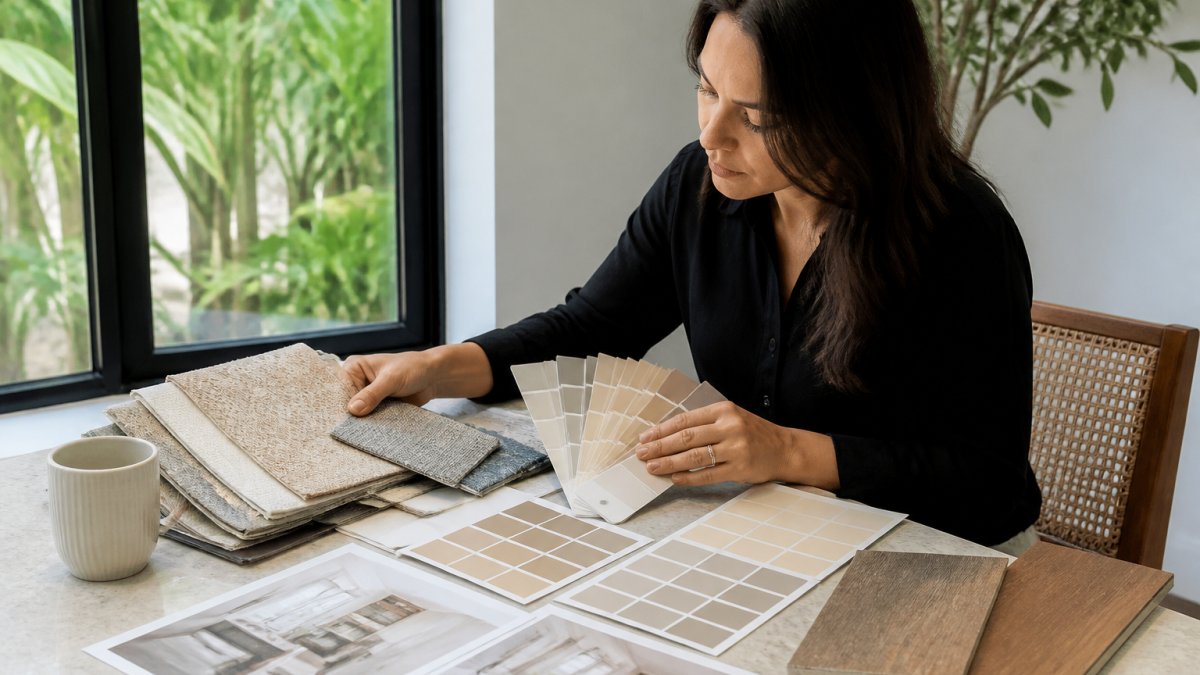
Clean and declutter the spaces you’re planning to paint. A cluttered room makes it harder to visualize how new colors will appear, so remove personal items that distract from evaluating the actual space and lighting.
Document your home’s existing finishes. Note the color and finish of your flooring, cabinetry, countertops, trim, and any architectural features that won’t change, and take photos or bring samples of tile, stone, or wood elements.
Identify your lighting situation. Note which windows face which direction, whether you have skylights, and what type of artificial lighting you use (warm or cool-toned bulbs).
Think about how you use each room.
How to Choose Paint Colors for Your Home
Choosing paint colors involves more than picking a shade you like, it requires understanding how colors interact with your space. Start by identifying your home’s overall style: modern, traditional, transitional, farmhouse, or eclectic. Your palette should reinforce this style rather than contradict it; a contemporary scheme looks out of place in a traditional colonial home, and vice versa.
Consider the undertones in your existing finishes. If your flooring has warm golden tones, cool gray paint will clash; if your cabinetry has cool undertones, warm beige walls create visual tension. The consultant identifies these undertone relationships and recommends colors that harmonize rather than compete, where many DIY selections fail, since a beautiful color can still have undertones that don’t work with what’s already in the space.
Evaluate how colors flow across your home. In open-concept layouts, adjacent paint colors must coordinate, since abrupt shifts create a disjointed feel. Work with the consultant to develop a cohesive palette using variations of compatible colors rather than random selections from different families.
Assessing Your Home’s Existing Finishes
Your home’s existing finishes set the foundation for color selection. These fixed elements, flooring, cabinetry, countertops, trim, and architectural details, won’t change, so your paint colors must work with them.
Start by identifying the dominant materials in each room. Oak cabinetry with golden undertones pairs better with warm paint colors than cool grays, while cool-toned gray tile flooring calls for walls that echo that coolness rather than introducing warm tones that create visual conflict. The consultant assesses these relationships and recommends colors that create harmony.
Pay attention to the finish of your existing elements. Matte finishes read differently than glossy ones, and natural wood grain introduces warmth that paint must either embrace or carefully contrast against. Stone countertops often contain multiple colors; the consultant identifies the dominant undertone and recommends paint colors from that same undertone family.
Consider whether you plan to update any finishes in the future. If you’re replacing flooring or cabinetry in the next few years, the consultant can recommend paint colors that work with your planned updates, not just your current finishes, preventing the need to repaint when you refresh other elements.
Evaluating Lighting and How It Affects Paint Colors
Lighting is the single most influential factor in how paint colors appear. The same color looks completely different under natural versus artificial light, morning versus afternoon light, and north- versus south-facing light.
Natural light varies by room orientation: north-facing rooms receive consistent but cool light, south-facing rooms get warm, intense light, east-facing rooms get bright morning light that shifts through the day, and west-facing rooms receive warm afternoon and evening light. These directional differences mean the same paint color performs differently in each room.
Artificial lighting matters equally. Warm white bulbs (2700K) cast yellowish tones that can make cool grays look sickly or warm colors overly orange, while cool white bulbs (4000K+) can make warm colors look dull and cool colors clinical. The consultant assesses your actual lighting setup and recommends colors that work under both natural and artificial conditions.
Time of day affects color perception: colors selected during a daytime consultation may look completely different at night under artificial light.
Open-Concept Paint Color Ideas and Coordination
Open-concept spaces require thoughtful color coordination. Unlike traditional homes with separate rooms, open layouts make paint colors in different functional areas visible simultaneously, so abrupt changes feel jarring while a carefully planned palette creates visual flow.
The most effective approach uses a cohesive undertone family across the entire space. Rather than completely different colors, select variations within the same undertone range, for example, warm neutrals throughout: cream in the kitchen, warm gray in the living area, soft taupe in the dining space.
Alternatively, use one dominant color with accents. Paint most of the open space in a neutral base, then use a complementary accent in one functional area, a deeper tone in the dining area or a subtle shift in an office nook, creating definition without visual chaos.
Vertical elements matter in open concepts. With a two-story ceiling, the eye travels upward, making color transitions more noticeable, so keep upper wall colors consistent or use very subtle shifts. Save bolder choices for accent walls or lower portions where they feel grounded.
Paint Color Matching Service and Testing
Paint color matching services help ensure your final result matches your vision. Before committing to painting an entire room, professional painters recommend testing colors on your actual walls.
The consultant provides samples of recommended colors, which you apply to your walls in the actual space. View them at different times of day, morning, afternoon, and evening, under both natural and artificial light.
Paint large enough sections to see the true color. A small paint chip is misleading because your eye perceives small areas differently than large ones, so paint patches at least 2-3 feet square and stand back to evaluate how the color reads in the space.
Leave samples up for several days if possible.
At Details Paint Co, we emphasize this testing phase because it’s where most color consultation mistakes get caught before any full-room painting begins. A few hours of sample testing saves weeks of frustration with a color that doesn’t work in your actual space.
Paint Color Consultation Cost and What’s Included
Paint color consultation pricing varies based on scope, travel distance, and project complexity. A single-room consultation typically costs less than one for an entire home or complex multi-room project, and some contractors include consultation fees in the final painting estimate while others charge separately.
What’s included depends on the service level. A basic consultation includes on-site assessment, color recommendations, and paint sample suggestions. A comprehensive one adds personalized palette development, multi-room coordination, undertone analysis of existing finishes, and detailed documentation.
Ask the contractor what’s included before booking. Some consultations include paint samples and follow-up support for adjusting recommendations; others require you to purchase samples separately or charge for additional consultations.
For the most accurate pricing and what’s included with Details Paint Co’s color consultation services, visit our website or request a free quote.
Evaluating Your Painting Contractor’s Expertise
Not all painting contractors offer quality color consultation services. Evaluating expertise helps you choose one who understands color theory, lighting assessment, and design coordination, not just someone who can paint walls.
Look for contractors who ask detailed questions before making recommendations. Anyone who immediately suggests colors without understanding your lighting, existing finishes, or design preferences is operating on assumptions rather than assessment.
Ask about their process. Do they visit in person to assess lighting and existing finishes? Do they provide paint samples and recommend testing before full-room painting? Do they coordinate colors across multiple rooms? Contractors who skip these steps often deliver disappointing results.
Request examples of previous color consultation projects. Photos show whether they understand color coordination, how colors appear in real spaces, and whether their recommendations align with different home styles; before-and-after photos are especially valuable for showing the transformation from existing conditions to final result.
Check for proper licensing and insurance. A fully licensed and insured contractor demonstrates professionalism and protects you if something goes wrong, so ask for proof before hiring.
Common Color Consultation Mistakes to Avoid
Understanding common mistakes helps you navigate color selection more successfully. The most frequent error is choosing colors from small paint chips or showroom samples under artificial lighting.
Another mistake is ignoring existing finishes. Homeowners often fall in love with a color without checking whether its undertones work with their flooring, cabinetry, or trim, a beautiful cool gray looks terrible against warm golden flooring.
Failing to account for lighting changes is another common error: a color that looks perfect under bright morning light may look sickly under warm evening lighting.
Selecting colors in isolation rather than as a coordinated palette creates visual chaos, especially in open-concept homes. Each color may be beautiful individually, but if they don’t coordinate, the overall effect feels disjointed.
Rushing the selection process is another trap.
Selecting the right paint colors transforms your space, but the process requires more than personal preference, it demands understanding how color interacts with your home’s unique lighting, existing finishes, and layout. Get a free consultation with Details Paint Co.
Frequently Asked Questions
How should I prepare for a paint color consultation?
Gather samples of colors you like, take photos of your space in different lighting conditions, and note any existing finishes like flooring, cabinetry, or trim that will influence your palette. Measure your rooms and bring any design inspiration or mood boards. Have a clear sense of your home’s style and the mood you want to create. Make a list of questions about how lighting affects colors and whether your chosen palette will coordinate across open areas. Share any restrictions, such as HOA-approved colors, that may limit your options.
What is included in a paint color consultation?
A professional paint color consultation typically includes an on-site assessment of your space, lighting conditions, and existing finishes. The consultant will discuss your design preferences and the purpose of each room. They provide personalized color recommendations based on undertones, natural and artificial lighting, and how colors coordinate across rooms. Many consultations include color sample boards or test patches so you can see how colors perform in your actual space. The consultant may also advise on sheen, trim colors, and accent colors to complete your design vision.
Can a painting contractor match an existing paint color?
Yes, professional painting contractors offer paint color matching services. They can analyze an existing color from your home, a fabric, or a reference sample using color-matching technology or visual assessment. However, matching depends on the condition of the existing finish and whether the original paint formula is still available. Contractors typically recommend testing the matched color on a sample board in your space first, since lighting, undertones, and the age of the original finish can affect how closely the new color replicates the old one.
How much does a paint color consultation cost?
Paint color consultation pricing varies based on the scope of work, whether the consultation is remote or on-site, and the complexity of your project. Some painting contractors offer free consultations as part of their service offering, while others charge a fee that may be credited toward your painting project. Details Paint Co offers free consultations to discuss your color needs and project scope. Contact your contractor directly to understand what’s included and whether consultation fees apply to your specific residential or commercial painting project.


