
Table of Contents
- Understanding Painting Service Alternatives
- Questions to Ask a Painting Contractor
- How to Compare Painting Estimates
- Painting Project Timeline: What to Expect
- Interior Painting Services: Scope and Specialization
- Verifying Credentials and Protecting Your Property
- Frequently Asked Questions
Last Updated: October 18, 2026
Understanding Painting Service Alternatives
Whether you need interior painting, exterior work, or specialty finishes, understanding your painting service alternatives helps you choose the right contractor. The market ranges from national chains to local, owner-operated shops, each with different strengths, pricing, and capabilities.
What separates a quality painting service from a frustrating one comes down to three things: how contractors approach the estimate process, how they protect your property during work, and whether they stand behind the finished product.
Questions to Ask a Painting Contractor
Start with credentials.
Next, ask about experience with your specific project type. Interior painting differs from exterior work, and specialty finishes like faux finishes or wall paneling require trained craftsmen.
Ask about surface preparation, where most painting jobs succeed or fail. Poor prep means paint won’t adhere and the finish won’t last.
Finally, ask how they protect your space: how they handle furniture and what precautions they take against drips and spills.
How to Compare Painting Estimates
Compare at least two or three estimates before deciding. Most bids look similar on the surface, a lump sum, a start date, a rough duration, but the line items underneath determine whether prices are truly comparable.
Build a one-page comparison worksheet before you call anyone: providers across the top, cost factors down the side, each cell filled from the written estimate. This forces every bid onto the same basis and exposes gaps a verbal quote hides.
The Quote-Factor Checklist
Use these factors as rows on your worksheet. Ask every provider to address each one in writing:
- Square footage and surface count. Walls, ceilings, trim, doors, and windows should be counted separately. A bid that prices “one room” without a surface breakdown is hard to compare against an itemized one.
- Surface preparation scope. Specify whether the bid includes washing, scraping, sanding, caulking, patching nail holes and cracks, and spot-priming bare wood or patched areas. Prep is the single largest driver of both price and durability.
- Primer. Confirm whether primer is included, what type (water-based, oil-based, stain-blocking shellac for knots and water stains), and how many coats.
- Paint brand, product line, and sheen. “Two coats of quality paint” is not a comparable line item. Ask for the manufacturer, product line, and sheen (flat, eggshell, satin, semi-gloss) for walls, ceilings, and trim separately. Product line matters more than brand, builder-grade and premium lines from the same manufacturer behave very differently.
- Number of finish coats. Two coats is the common standard for color change; one coat over a similar color is sometimes acceptable but should be stated explicitly.
- Trim, doors, and windows. These are typically priced per linear foot or per unit and are frequently excluded from a “room” price. Confirm whether they are brushed, rolled, or sprayed, and whether doors are removed and rehung.
- Furniture moving and protection. Who moves furniture, who supplies drop cloths and plastic, and whether the price includes daily cleanup and final debris removal.
- Drywall and plaster repair. Patching is often billed separately. Ask what size holes and cracks are included and what triggers an extra charge.
- Lead-paint and moisture assessment. Homes built before 1978 may require lead-safe practices under the EPA’s Renovation, Repair and Painting Rule; exterior bids should also address moisture, rot, and substrate repair.
- Warranty. Ask for the workmanship warranty length in writing and what it covers, peeling, blistering, and premature fading are common exclusions.
- Payment schedule and deposit. A deposit of 10-30% is common; large upfront payments are a red flag. Confirm the final payment is tied to a walkthrough.
- Change-order process. Ask how mid-project additions are priced and approved in writing.
Normalizing Bids So the Numbers Mean Something
Once the worksheet is filled in, compare like with like. If one bid includes two coats of a premium product over fully prepped surfaces and another includes one coat of a builder-grade product over minimal prep, the lower number isn’t a better deal, it’s a different scope. Calculate a rough price per square foot of paintable surface for each bid to spot outliers.
Watch for these patterns:
- A bid that is 20% or more below the others usually reflects fewer prep steps, fewer coats, or a lower-grade product. Ask the provider to confirm each line item before assuming efficiency.
- A bid with a large “miscellaneous” or “materials” line without a product specification is hard to compare. Request the product list.
- A bid that excludes trim, ceilings, or prep will look cheaper until those items are added back.
- A bid with no stated timeline or weather contingency for exterior work is incomplete, not competitive.
Ask each provider to submit the estimate using the same line-item categories you list on your worksheet. Most will accommodate the request, and the ones who won’t are telling you something about how they handle change orders.
Reading the Timeline and Contingency Language
A proper estimate goes beyond a single number: it specifies what’s included, the number of coats, the specific paint products, and whether cleanup is included.
Quality estimates also address timeline: how long the project will take and whether work happens daily or with gaps.
The estimate should itemize labor and materials separately.
Ask what happens if the project runs over budget or takes longer.
The goal of comparing estimates is not to find the lowest number, it is to find the bid whose scope, products, and warranty match what you actually want, at a price that reflects that scope. A worksheet filled in from written bids is the fastest way to see which providers are offering comparable work.
Painting Project Timeline: What to Expect
A standard interior room, roughly 12×14 feet, usually takes 2-4 days for a professional crew. This includes surface prep, priming if needed, multiple coats, and cleanup. Exterior painting on a single-story home typically takes 5-10 days depending on weather and surface condition.
Weather affects exterior work dramatically, rain, high humidity, and temperature extremes all slow it down. Professional contractors build in weather contingency.
Surface preparation often takes longer than painting itself. Removing old paint, filling holes, sanding, and priming can be 40-60% of total project time.
Professional contractors update you if work extends beyond the original timeline and explain why. Silence during a project is usually a warning sign.
Interior Painting Services: Scope and Specialization
Interior painting sounds straightforward, but scope varies significantly between contractors. Knowing what different painters offer helps you choose the right fit.
Basic interior painting covers walls and ceilings with standard finishes. Doing it right requires proper prep, primer, and quality paint applied evenly, clean lines at trim, no drips, consistent coverage.
Many homeowners want color consultation, understanding how light affects color in their space and recommending options that work with their décor.
Specialty Finishes and Custom Work
Specialty finishes separate experienced contractors from basic painters. Faux finishes, techniques that create texture, depth, or visual effects, require skill and training.
Wall paneling and custom wall treatments are another specialty area, often involving shiplap, beadboard, or other materials installed before painting.
Ceiling painting is harder than wall painting, requiring special equipment, technique, and stamina. Specialists know how to avoid drips and achieve even coverage overhead.
When comparing painting service alternatives, ask specifically about specialty work.
Verifying Credentials and Protecting Your Property
How do you know a contractor is actually licensed and insured, and how do you protect your property during the work?
Verifying the License
Licensing rules for painting contractors vary by state and sometimes by municipality. Some states issue a specific painting or home-improvement contractor license; others require registration with a state consumer protection or contractor board; still others leave licensing to counties and cities. The verification step is the same everywhere: find the issuing authority, then check the license or registration directly.
A practical sequence:
- Ask for the license or registration number in writing on the estimate or contract, not just verbally.
- Identify the issuing authority. Start with your state’s contractor licensing board or consumer protection office. Many states maintain searchable online databases; municipal building departments often maintain their own lists for locally licensed trades.
- Confirm the status and the name. The license should be active and issued to the legal business name or the individual you are contracting with, not a similar-sounding entity.
- Check for complaints or disciplinary actions where the database provides that history.
- Confirm the license covers the work you’re hiring for. A license limited to residential work may not cover commercial projects, and vice versa.
A contractor who cannot produce a license or registration number when asked is a stop sign, not a negotiation point. In states that require licensing, hiring an unlicensed contractor can limit your ability to recover damages and may affect insurance coverage for the work.
Reading the Insurance Certificate
Ask for a certificate of insurance (COI) and read it rather than filing it. Two coverages matter for a painting project:
- General liability insurance protects your property if the crew damages floors, fixtures, landscaping, or a neighbor’s property. Confirm the policy is current and the coverage limits are stated on the certificate.
- Workers’ compensation insurance covers the contractor’s employees if they are injured on your property. A contractor without workers’ comp whose employee is hurt on your job can create a liability exposure for you as the property owner. Confirm the certificate lists workers’ comp, or that the contractor has a state-approved exemption if they are a sole proprietor.
A few details are worth checking on the certificate itself:
- The named insured should match the contracting business.
- The policy effective dates should cover your project window.
- The certificate holder section can list you, so the insurer notifies you if the policy is canceled.
- For subcontractors, ask whether the contractor requires their subs to carry their own liability and workers’ comp coverage.
Reviews, References, and Warranty
Customer reviews and references matter, but approach them carefully. Ask the contractor for references, specific past clients you can contact. A contractor confident in their work will provide them.
Online reviews are useful for spotting patterns rather than individual complaints. Look for recurring themes about prep quality, cleanup, punctuality, and how the contractor responded when something went wrong.
Ask for the workmanship warranty in writing.
Protecting Your Property During the Work
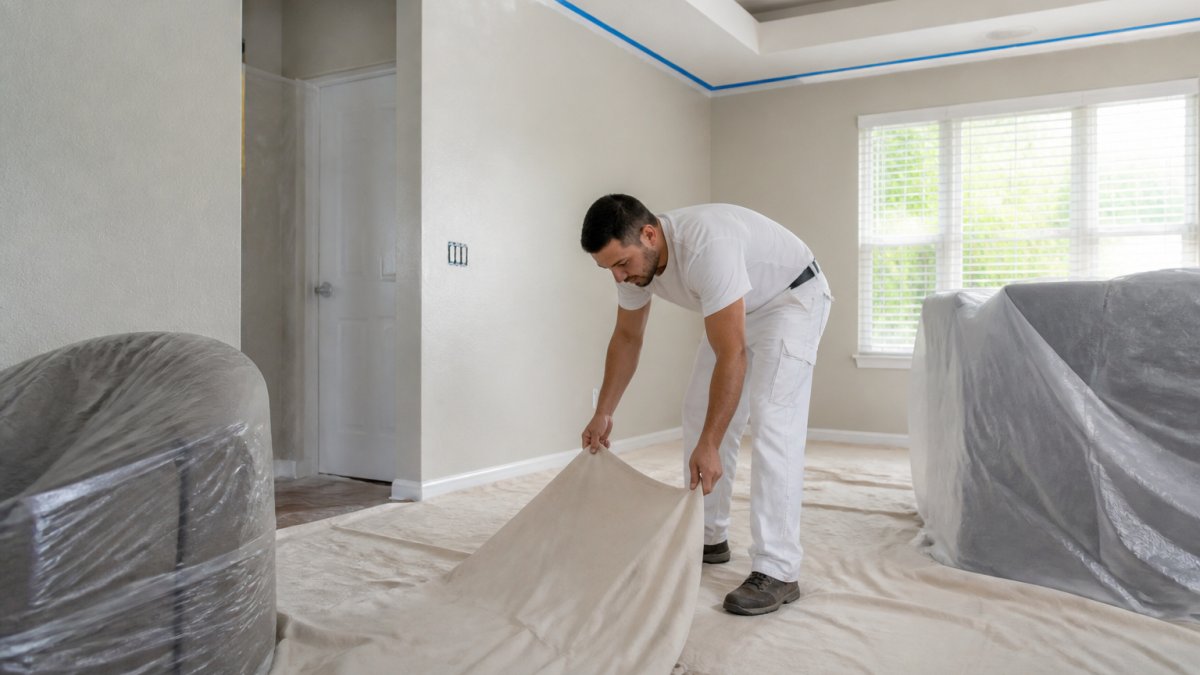
Property protection during work is where professionalism shows. The contractor should use drop cloths to protect floors and furniture. Tape should protect trim, fixtures, and areas you don’t want painted.
A pre-work walkthrough is the most reliable protection.
Ask about insurance coverage for accidental damage. Even careful contractors occasionally have accidents. Knowing how damage claims are handled before work starts prevents disputes later.
Verification is a short, concrete checklist: license number confirmed with the issuing authority, certificate of insurance read for general liability and workers’ comp, references called, warranty reviewed in writing, and a documented pre-work walkthrough. A provider who supports all five is a materially safer choice than one who waves off any of them.
Frequently Asked Questions
What should I compare when choosing a painting service?
Focus on licensing and insurance verification, detailed written estimates that break down labor and materials, timeline and availability for your project, customer reviews and references, warranty or guarantee terms, and the contractor’s experience with your specific project type (interior, exterior, specialty finishes). Request multiple quotes to understand the market range, but the lowest price rarely reflects the best value for quality and reliability.
How can I compare painting estimates effectively?
Ensure each estimate includes surface preparation costs, primer and paint specifications, labor hours, cleanup, and warranty details. Estimates should be itemized rather than a single lump sum. Check that contractors are evaluating the same scope of work, different interpretations of prep work or surface condition can explain price variations. Ask whether the estimate accounts for your property’s specific challenges, like older surfaces or specialty finishes.
What questions should I ask before hiring a painting contractor?
Ask for proof of licensing and insurance, references from recent residential or commercial projects, their process for color matching and finish selection, how they handle disruptions to your daily schedule, what happens if the project runs behind, whether they handle surface preparation and cleanup, warranty coverage, and their experience with your home’s age or condition. Understanding their approach to these details reveals professionalism and attention to detail.
How long does a typical professional painting project take?
Residential interior projects typically take 3-7 days depending on room size, surface condition, and number of coats. Exterior work often requires 5-10 days due to weather considerations and surface preparation. The contractor’s timeline estimate should account for prep work, priming, multiple paint coats, and drying time between applications. Ask your contractor for a realistic schedule upfront and clarify how weather delays or unexpected surface issues are handled.